A handmade khukuri is not something you simply buy, use, and forget.
A properly cared-for khukuri can remain a useful and beautiful piece of craftsmanship for many years. Whether your khukuri is a working tool, a traditional Nepali collectible, an outdoor companion, or a piece of Nepal's craftsmanship that you keep as part of your collection, regular care makes a significant difference.
Many traditional khukuris are made with carbon steel. Carbon steel is valued by bladesmiths for its working characteristics, but unlike stainless steel, it requires attention to moisture and storage conditions. A small amount of regular maintenance can help keep the blade clean, reduce the chance of rust, and preserve the natural character of the steel.
So, how should you care for a khukuri?
This complete guide explains how to clean a khukuri, how to protect a carbon-steel blade, how to prevent rust, how to care for the handle and leather sheath, and how to store your khukuri properly.
Why Proper Khukuri Care Matters
The khukuri is closely associated with Nepal and has a long tradition as a practical cutting tool and an important cultural object.
Traditional handmade khukuris are produced using natural materials and traditional craftsmanship. Depending on the design, a khukuri may have a carbon-steel blade, wooden or horn handle, and a leather sheath.
Each of these materials needs slightly different care.
The blade can develop surface rust when exposed to moisture. Wooden handles can dry out over time, while leather can absorb moisture and deteriorate if it is stored in poor conditions.
This is why khukuri maintenance is not just about keeping the blade sharp.
It is about looking after the entire khukuri.
A simple routine of cleaning, drying, protecting, and proper storage can help preserve both the functionality and appearance of your khukuri.
Understanding Your Khukuri Before You Maintain It
Before applying any maintenance method, it helps to understand what your khukuri is made from.
If you are still deciding which traditional Nepali khukuri is right for you, our complete khukuri buying guide explains the different styles, craftsmanship, uses, and important factors to consider before purchasing.
A typical handmade khukuri may contain:
- Carbon-steel blade
- Wooden, horn, or other natural-material handle
- Leather or traditional-style sheath
- Metal fittings
- Rivets or pins
- Sometimes additional accessories such as a small utility knife or sharpening tool
Not every khukuri uses exactly the same materials.
For example, a polished blade may require different cosmetic care from a traditionally finished or semi-polished blade. Likewise, a wooden handle should not be treated in exactly the same way as a horn handle.
Always consider the materials used in your particular khukuri before applying any treatment.
How to Clean a Khukuri
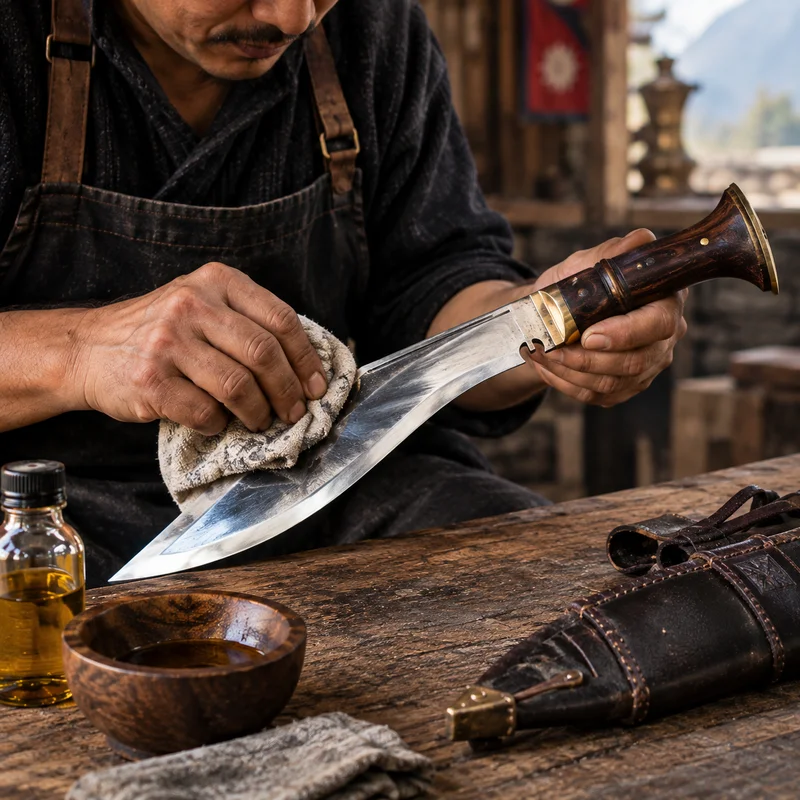
One of the easiest ways to maintain a khukuri is to clean the blade after use.
You do not need an elaborate cleaning routine.
For normal maintenance, the basic process is:
1. Remove dirt and debris
After using the khukuri, inspect the blade for dirt, plant residue, moisture, or other material.
Use a soft cloth to wipe the blade.
If the blade has been exposed to moisture, do not put it directly back into its sheath.
2. Dry the blade completely
Moisture is one of the main things to watch when caring for carbon steel.
Wipe the blade thoroughly with a clean, dry cloth.
Pay attention to areas where moisture can remain, including near fittings and along parts of the blade that are difficult to wipe.
3. Apply a light protective coating
Once the blade is completely dry, apply a very thin layer of suitable blade-protective oil.
The goal is not to make the blade heavily oily.
A light protective film is generally sufficient for storage and routine maintenance.
4. Wipe away excess oil
After applying the oil, use a clean cloth to remove excess.
The blade should have a light protective coating rather than being dripping wet with oil.
How to Prevent Rust on a Khukuri
Rust prevention is one of the most important parts of carbon-steel khukuri maintenance.
Carbon steel naturally reacts with moisture and oxygen. This means a carbon-steel blade can develop rust if it is repeatedly exposed to humidity and left without protection.
This does not mean your khukuri should never develop any change in appearance.
Traditional carbon steel can naturally develop patina over time. Patina and active rust are not necessarily the same thing.
Active rust should be addressed, while a natural patina can be part of the changing appearance of carbon steel.
Simple ways to reduce rust risk:
- Keep the blade dry.
- Wipe the blade after handling or use.
- Apply a light protective oil when appropriate.
- Avoid storing the khukuri in a damp location.
- Do not leave moisture trapped against the blade.
- Check the blade periodically, especially during humid weather.
- Pay extra attention if the khukuri is stored for a long period.
For collectors in humid environments, regular inspection is particularly important.
Frequently Asked Questions About Khukuri Care
How do you clean a khukuri?
Wipe the blade with a clean cloth, remove dirt and residue, and dry it completely. For carbon-steel blades, a light protective coating can help reduce exposure to moisture during storage.
How do you prevent a khukuri from rusting?
Keep the blade clean and dry, avoid storing it in damp conditions, inspect it regularly, and use a suitable light protective coating when appropriate.
Can a khukuri get rusty?
Yes. Carbon-steel khukuris can develop rust when exposed to moisture and oxygen without proper care. Regular cleaning, drying, inspection, and protection can reduce the risk.
Should I oil my khukuri?
A suitable light protective oil can be useful for many carbon-steel blades, particularly during storage. Avoid excessive application and follow any specific care instructions supplied with your khukuri.
Can I store my khukuri in its leather sheath?
Yes, but the blade should be completely dry before storage. Avoid placing a wet or damp blade into a leather sheath for long periods.
How often should I maintain my khukuri?
It depends on use and storage conditions. A khukuri used regularly should be cleaned and inspected after use. A stored khukuri should still be checked periodically, especially in humid environments.
What should I do if my khukuri develops rust?
Light surface oxidation can sometimes be addressed with careful cleaning using a suitable non-aggressive method. Extensive rust or pitting may require professional assessment to avoid damaging the original blade.
Does a handmade khukuri need special care?
Handmade khukuris may use natural materials such as carbon steel, wood, horn, and leather. These materials can benefit from regular cleaning, appropriate protection, and sensible storage.
Categories
Recent Posts
 Featured
 Featured
How to Choose a Traditional Nepali Khukuri: A Complete Guide to Styles, Craftsmanship, Uses and Buying
Sep 22, 2026
Read Post Featured