There are some objects that are more than tools.
They become symbols.
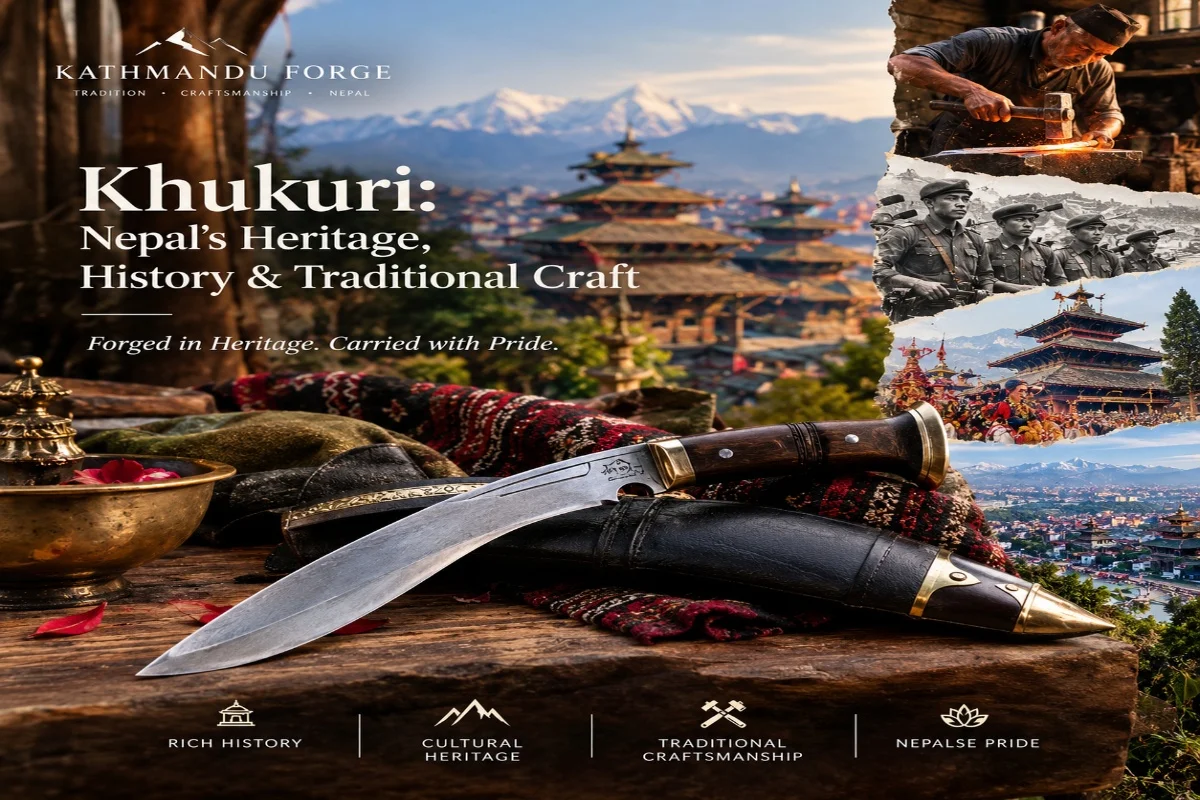
In Nepal, few objects carry as much cultural recognition as the Khukuri, also spelled Kukri. With its distinctive curved blade, solid construction, and unmistakable silhouette, the Khukuri has become closely associated with Nepalese craftsmanship, military history, Gurkha tradition, and the identity of the Himalayan nation.
But the story of the Nepali Khukuri is much larger than its reputation as a fighting knife.
It is a story of blacksmiths working with fire and steel, generations of craftsmanship, soldiers carrying a familiar blade into difficult terrain, and a country whose history was shaped through centuries of political change.
Today, handmade Khukuris are also collected by people around the world who appreciate traditional Nepalese craftsmanship.
At Kathmandu Forge, we believe that understanding the story behind a Khukuri makes the knife itself much more meaningful.
What Is a Khukuri?
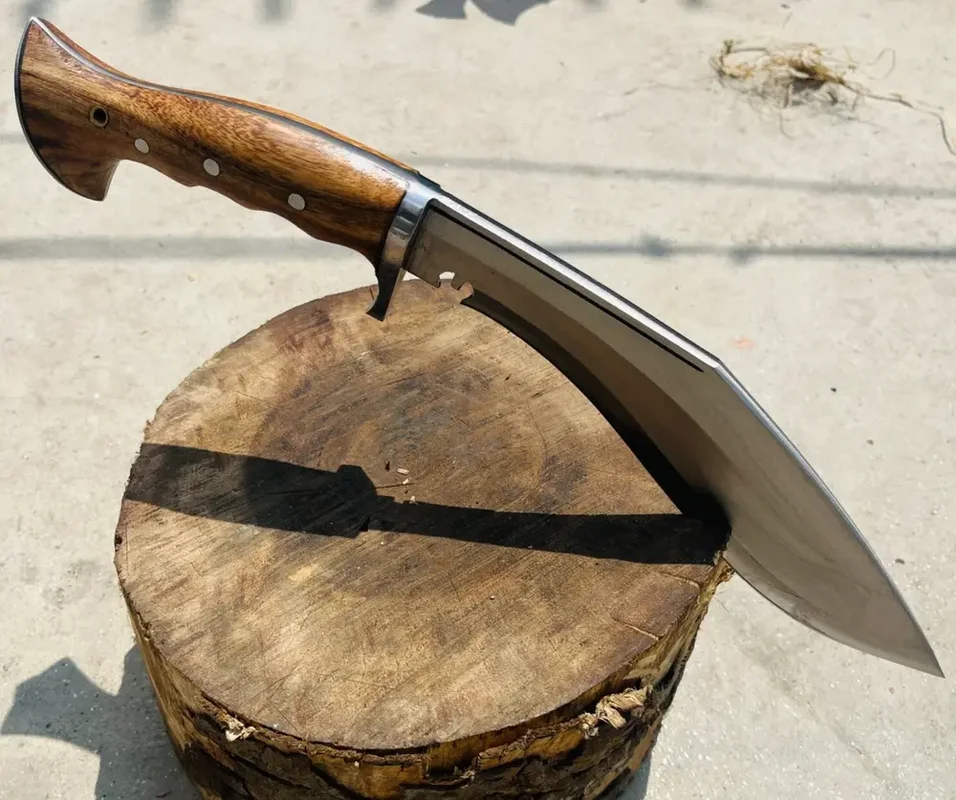
A Khukuri is a traditional Nepalese knife recognized by its inwardly curved blade. In English, you will commonly see the spelling Kukri, while Khukuri is widely used in Nepal and in discussions of Nepalese tradition.
The curved blade is perhaps its most recognizable feature.
Unlike a conventional straight knife, the Khukuri has a forward-weighted curved profile. Traditional examples can vary considerably in blade size, shape, thickness, handle construction, decoration, and intended use.
This variety is one reason why handmade Nepalese Khukuris are so interesting to collectors.
A Khukuri is not simply one standardized knife.
It represents a family of traditional Nepalese blade designs developed and refined through craftsmanship and use.
The Khukuri in Nepalese History
The history of the Khukuri is closely connected with Nepal's military history, particularly the history of the Gorkhali forces and the later Gurkha military tradition.
One important chapter begins during the campaigns of King Prithvi Narayan Shah, who became king of Gorkha in 1743 and began a campaign that eventually brought many of the region's small kingdoms under Gorkhali rule.
The campaign was not won through one battle or one weapon. It involved military organization, alliances, strategy, supply lines, diplomacy, and repeated campaigns.
The Nepali Army itself describes the unification campaigns as an important part of its historical development, noting the army's role in the battles fought during the unification of modern Nepal.
The Khukuri became part of this broader military tradition.
From Gorkhali Soldiers to the Gurkha Tradition
The story of the Khukuri continued long after the campaigns of Prithvi Narayan Shah.
The knife became strongly associated internationally with Gurkha soldiers, whose military reputation developed over the following centuries.
The Khukuri became recognizable far beyond Nepal.
For many people outside Nepal, the curved knife became one of the first objects they associated with the Gurkhas.
But inside Nepal, its meaning is broader.
It can represent traditional craftsmanship, family heritage, military history, rural life, craftsmanship, and Nepalese identity.
That is why a handmade Khukuri can mean something very different from an ordinary mass-produced knife.
The Khukuri Is Also a Story of the Blacksmith
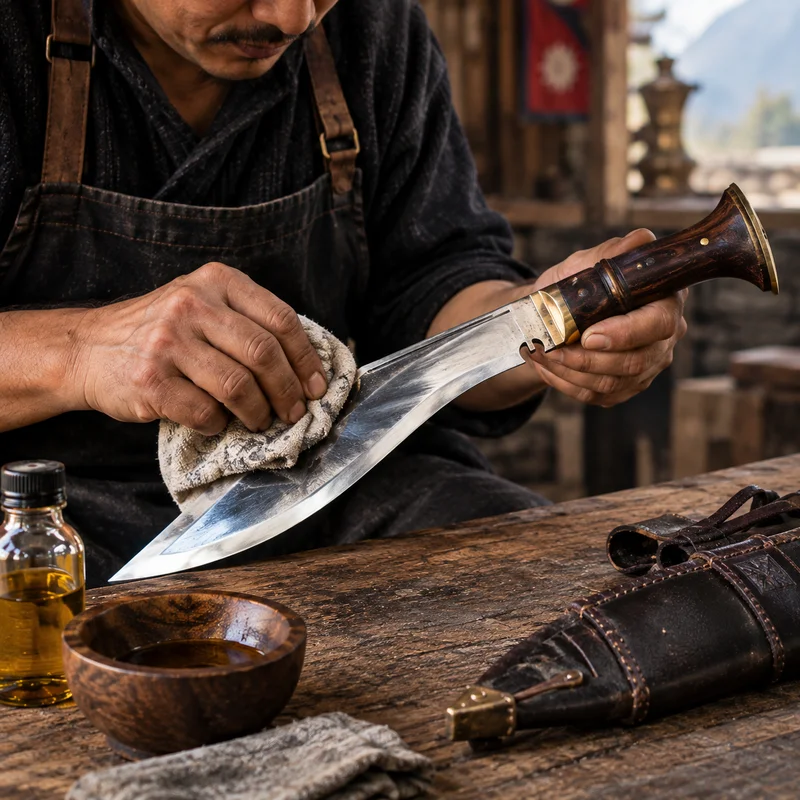
Behind every traditional Khukuri is another story that deserves attention: the story of the craftsman.
Traditional blade making requires knowledge of steel, heat, shaping, grinding, sharpening, fitting, and handle construction.
Historically, Nepalese blacksmiths developed and passed down practical knowledge through generations.
The transformation is remarkable.
A piece of steel begins as raw material.
Fire changes it.
The hammer shapes it.
Grinding gives the blade its profile.
Heat treatment affects its properties.
The handle gives it a place in the hand.
The sheath completes the traditional set.
The result is not simply a piece of metal.
It is craftsmanship.
Why Handmade Khukuris Are Different
Modern manufacturing can produce thousands of identical objects.
Handmade Khukuris are different.
A traditionally crafted Nepalese Khukuri can contain small variations in:
- Blade shape
- Hammer marks
- Surface finish
- Handle grain
- Rivet placement
- Sheath construction
- Overall dimensions
For some collectors, these small differences are part of the appeal.
They are evidence that the object was individually worked rather than simply taken from an assembly line.
This is particularly important when buying a handmade Nepalese Khukuri.
A buyer is not only purchasing a knife.
They are purchasing a piece of craftsmanship connected to Nepal.
Explore Handmade Nepalese Khukuris
If you are looking for a handmade Nepalese Kukri, traditional Khukuri, Gurkha Khukuri, 3 Chirra Kukri, carbon steel Kukri, or a traditional Nepalese knife, explore the collection at Kathmandu Forge.
Discover the craftsmanship, materials and traditional designs behind our Nepalese Khukuris and find a piece that connects with your interest in Nepalese heritage and handmade knife craftsmanship.
Explore Kathmandu Forge's handmade Khukuri collection and discover the story behind the blade
Frequently Asked Questions
What is a Khukuri?
A Khukuri, also spelled Kukri, is a traditional Nepalese curved-blade knife strongly associated with Nepal and the Gurkha military tradition.
Is Khukuri the same as Kukri?
Yes. Khukuri and Kukri are two commonly used English spellings referring to the same traditional Nepalese knife.
Where are traditional Nepalese Khukuris made?
Khukuris are made in different parts of Nepal by individual craftsmen and workshops. If purchasing one, check the seller's stated origin and manufacturing details.
Categories
Recent Posts
 Featured
 Featured
 Featured
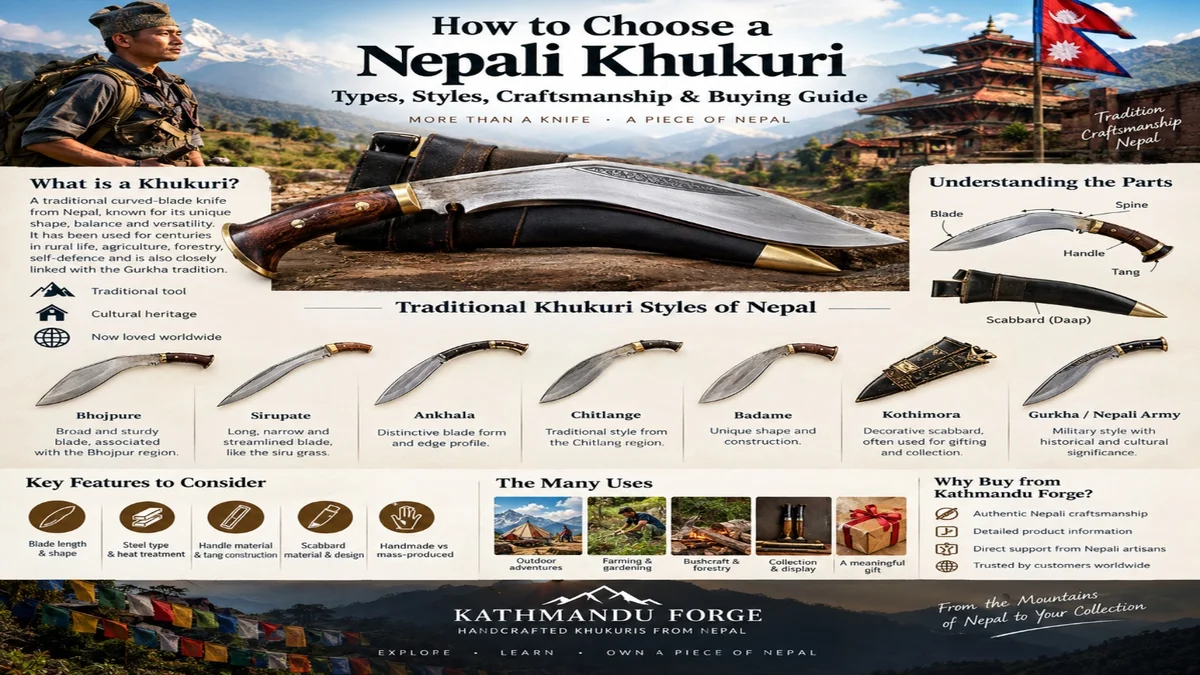
How to Choose a Traditional Nepali Khukuri: A Complete Guide to Styles, Craftsmanship, Uses and Buying
Sep 22, 2026
Read Post